
Ablative skin resurfacing- CO2 laser
A youthful upper lip, all your own
Lip lift surgery addresses elongation of the skin between the nose and upper lip. Often, lip filler or fat transfer can be performed simultaneously to enhance volume and definition.
Ablative skin resurfacing at a glance
Overview
Ablative laser skin resurfacing delivers controlled, precise skin renewal to address fine lines, wrinkles, uneven texture, sun damage, age spots, acne scarring, and skin laxity. Unlike topical treatments or non-ablative devices, ablative CO2 laser resurfacing removes the outermost skin layers entirely, triggering the body's healing response and stimulating robust collagen remodeling. Results are transformative — patients describe smoother, brighter, tighter, more even skin than in decades.
Dr. Anghel performs fractional CO2 laser resurfacing with individualized precision, often alongside facelift, blepharoplasty, or lip lift, or as targeted perioral and periorbital treatments for localized concerns.
Recovery
Ablative laser resurfacing requires more downtime than non-surgical treatments, typically 7–14 days depending on treatment depth. Initially, skin appears red, raw, and weeping as outer layers shed. By days 5–7, new pink skin emerges, with most patients returning to social activity once fully re-epithelialized within 10–14 days.
Dr. Anghel provides a detailed post-laser skincare protocol covering moisturization, sun avoidance, and gentle cleansing. Sun exposure should be avoided for 6 weeks minimum, and rigorous activity for 2 weeks, as skin continues improving for months through ongoing collagen production.
Results
Ablative laser resurfacing results emerge progressively as initial redness fades over 4–8 weeks, revealing smoother, tighter, more luminous skin. Texture improvement is noticeable within the first month, while collagen remodeling continues for 6–12 months post-treatment, meaning skin keeps improving long after surface healing.
CO2 laser results rank among the most durable non-surgical skin treatments available, with a single full-treatment session delivering years of improved tone and texture.
Maintenance treatments may be considered periodically based on individual skin aging patterns and sun exposure.

Types of ablative skin resurfacing

The most comprehensive option, full-face ablative resurfacing addresses skin aging, sun damage, uneven pigmentation, fine lines, and skin laxity across the entire face in a single treatment session. Frequently combined with facelift surgery or blepharoplasty for a complete surgical and surface rejuvenation. This approach delivers the most dramatic and globally uniform improvement.
Full-face CO2 laser resurfacing

Targeted resurfacing of the skin around the mouth addresses lip lines, vertical upper lip wrinkles, and the crepey perioral skin that develops with age and sun exposure. This treatment is frequently performed alongside a lip lift or as a standalone procedure for patients whose primary concern is the perioral area. The mouth area is one of the most difficult regions to treat with any other modality — ablative resurfacing remains the gold standard.
Perioral laser resurfacing

Targeted treatment of the skin around the eyes — including the lower eyelid skin, crow's feet, and upper eyelid crepiness — with precision-calibrated ablative laser energy. Frequently combined with lower blepharoplasty for a comprehensive lower eyelid rejuvenation. The delicate periorbital skin responds exceptionally well to resurfacing, with significant improvements in texture, tightness, and tone.
Periorbital laser resurfacing
For patients with atrophic acne scarring — including ice pick scars, boxcar scars, and rolling scars — ablative CO2 laser treatment delivers meaningful improvement by resurfacing the skin surface and stimulating the dermal remodeling needed to smooth depressed scars. Multiple sessions may be recommended for deeper scarring patterns.
Acne scar resurfacing
Laser skin resurfacing of the neck and chest addresses the sun-damaged skin, fine lines, uneven pigmentation, and skin laxity that commonly develop in these areas with age and sun exposure. This treatment is frequently combined with neck lift surgery for patients seeking both structural and surface improvement to the neck and lower face.
Neck and décolletage resurfacing
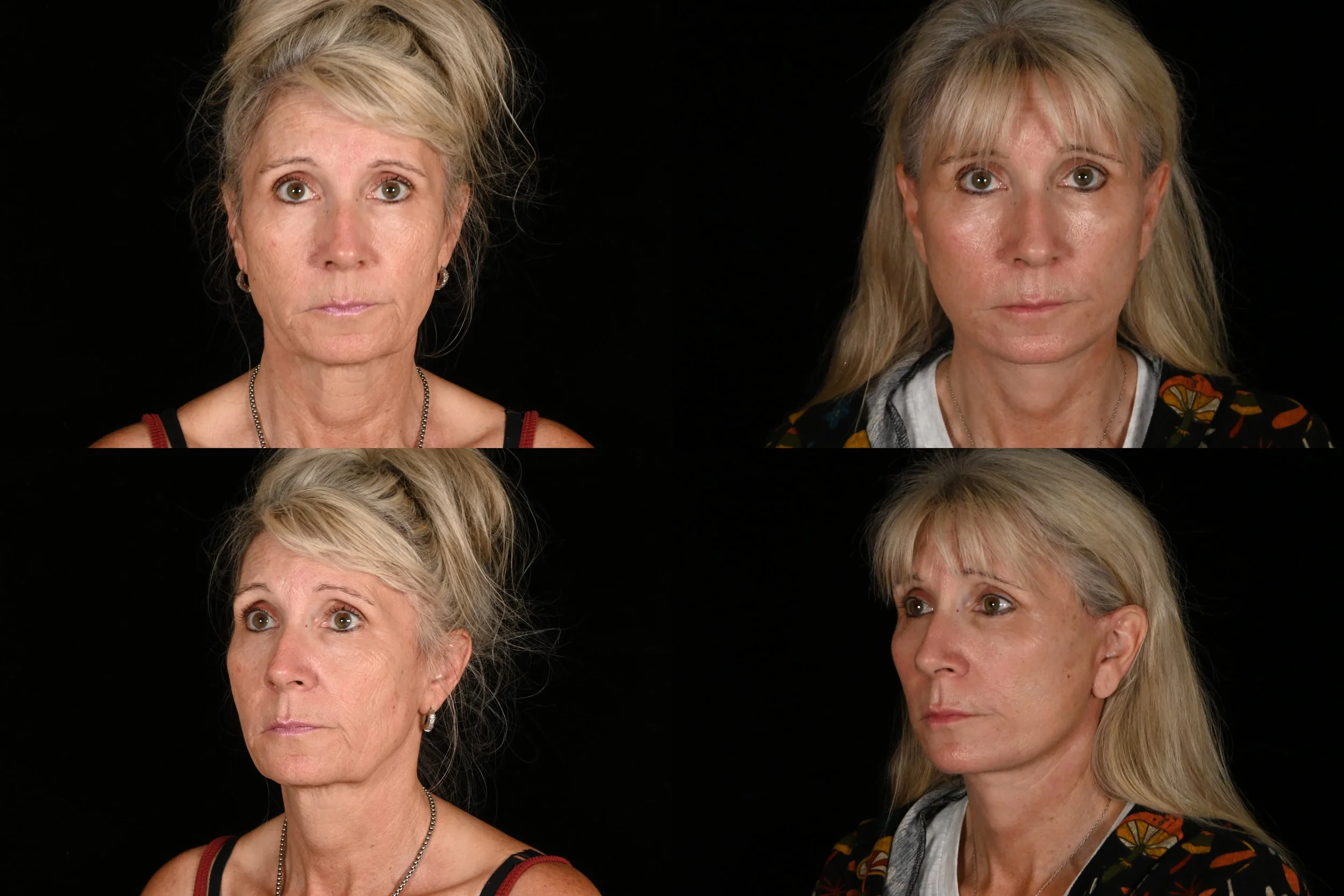
Ablative co2 laser resurfacing, brow lift, deep plane facelift and neck lift
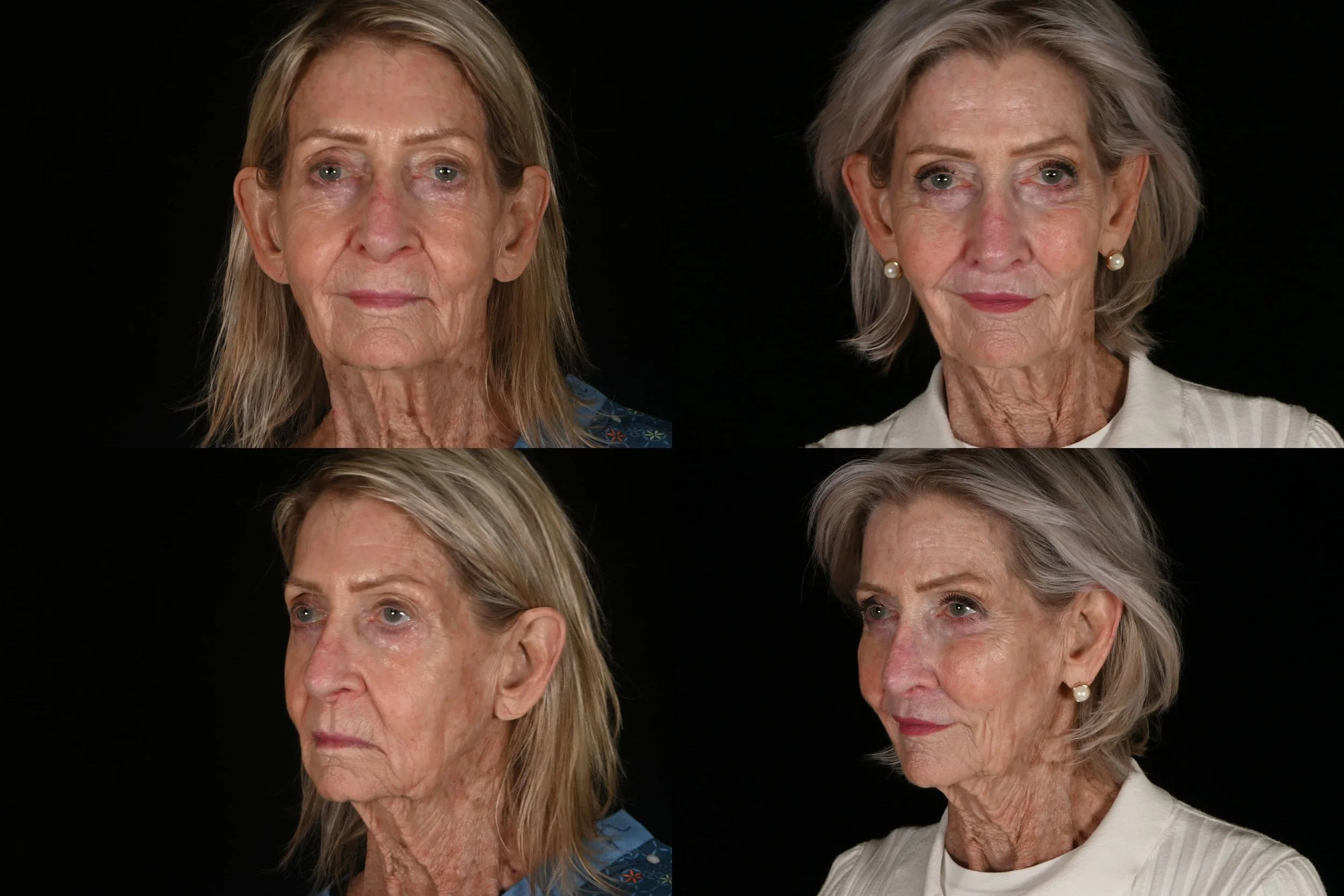
Ablative co2 laser resurfacing, hyaluronic facial filler in malor area
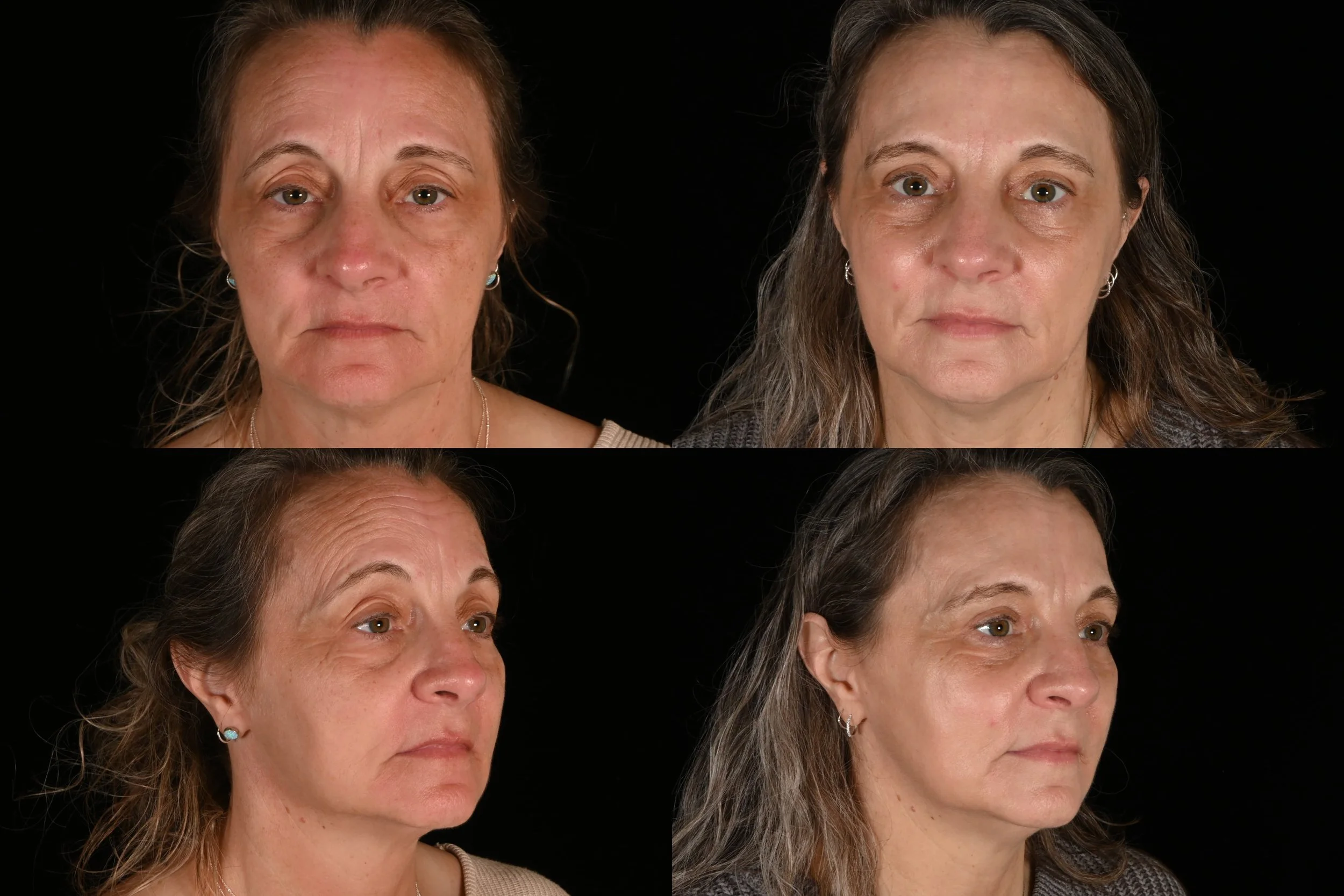
Ablative co2 laser resurfacing, upper blepharoplasty, lower blepharoplasty, brow pexy
-
Avoid blood thinning medications and nicotine. Discuss your surgery with your support person so they are ready to help the first 24-48 hours after surgery. We can arrange for hired help, if requested.
-
You can combine eyelid surgery, fat grafting, lip lift, ablative laser skin resurfacing.
-
Patients report that they feel well informed and cared for from the consultation through their recovery. They feel like ample time is given to answer all their questions. Read more about patients’ experiences here.
-
Healthy patients who desire an improvement in their face and neck are good candidates for deep plane face and neck lift. Patients can have unfavorable anatomy and desire an improvement earlier in life in their 30s or more commonly in their 50s. Patients should be within 15 pounds of their ideal goal weight prior to surgery.
Patients are required to be nicotine free 4 weeks before and 4 weeks after surgery.
-
Bleeding, infection, delayed healing, scarring, nerve dysfunction, cosmetic dissatisfaction, and anesthesia complications.
-
For isolated necklift surgery: underneath the chin and in some cases around the ear lobe.
For face and neck lift surgery: underneath the chin and around the ears into the occipital hairline.