
Facial fat grafting
Restoring volume where time has taken it
Fat grafting is a natural way to address volume loss in the cheeks, temples, and tear troughs. Therefore, restoring facial contour, commonly secondary to hollowing from aging or weight loss. Fat grafting can be performed alone or alongside other facial surgery.
Lip lifts at a glance
Overview
Facial fat grafting, or fat transfer, harvests the patient's own fat and precisely reintroduces it to volume-deficient facial areas. Unlike synthetic fillers, autologous fat grafting uses your body's own tissue for a biocompatible result that's long-lasting and moves dynamically with your face. Aging depletes fat in the under-eye hollows, cheeks, temples, lips, and jawline, creating gaunt, shadowed contours that skin tightening alone can't correct, which is a process often accelerated by weight loss or GLP-1 medications. Fat grafting restores youthful contours while improving skin quality through fat-derived stem cells.
Dr. Anghel performs fat grafting standalone or alongside facelift, blepharoplasty, and lip lift procedures.
Recovery
Most facial fat grafting patients return to social activity or work within 10–14 days. Swelling is more pronounced than with injectable fillers, reflecting the body's integration of transferred fat. Donor site bruising, typically from the abdomen, thighs, or flanks, resolves within 1–2 weeks. Most patients manage discomfort comfortably with over-the-counter medications.
Dr. Anghel recommends avoiding strenuous activity for 4 weeks, with gentle walking encouraged. Sleeping with the head elevated during early recovery supports optimal swelling resolution and fat graft survival.
Results
Facial fat grafting results are visible immediately, with true outcomes emerging at 3–6 months as transferred fat fully integrates. Some fat resorption is normal and accounted for during the procedure. Swelling peaks 2–3 days post-op, bruising resolves within 1–2 weeks, and swelling improves roughly 80% by 2 weeks, 90% by 1 month, and 95% by 3 months.
What remains at one year is permanent — long-term fat grafting results are remarkably durable, with many patients enjoying natural, youthful facial volume for a decade or more.

Types of facial fat grafting

For patients experiencing diffuse facial volume loss across multiple regions — including the temples, midface, cheeks, under-eye hollows, and jawline — a comprehensive full-face fat transfer restores a globally youthful and balanced appearance. This is most commonly performed in conjunction with deep plane facelift surgery for a complete facial rejuvenation.
Full-face fat grafting

Under-eye fat graft (tear through restoration)
One of the most impactful applications of fat grafting, fat transfer to the tear trough addresses the hollow under-eye appearance that creates persistent shadows and a fatigued look regardless of sleep. Fat is delicately layered beneath the lower eyelid to smooth the lid-to-cheek junction and restore a rested, refreshed appearance. Almost always combined with lower blepharoplasty.

For patients with midface volume deflation or flattened cheek contour, targeted fat grafting to the cheeks restores the lifted, rounded fullness of youth. This procedure softens nasolabial folds, improves overall facial harmony, and can reduce the appearance of facial aging without altering the underlying structure.
Cheek and midface fat grafting
Temporal hollowing is one of the earliest and most overlooked signs of facial aging. Restoring volume to the temples with fat grafting re-establishes the smooth, oval contour of the upper face and integrates seamlessly with brow lift and facelift results.
Temple fat grafting
For patients seeking natural, lasting lip volume restoration without filler, fat transfer to the lips and perioral area offers a permanent alternative. Fat is carefully placed into the upper and lower lip body and along the philtral columns for soft, proportionate fullness that moves naturally and ages gracefully.
Lip and perioral fat grafting
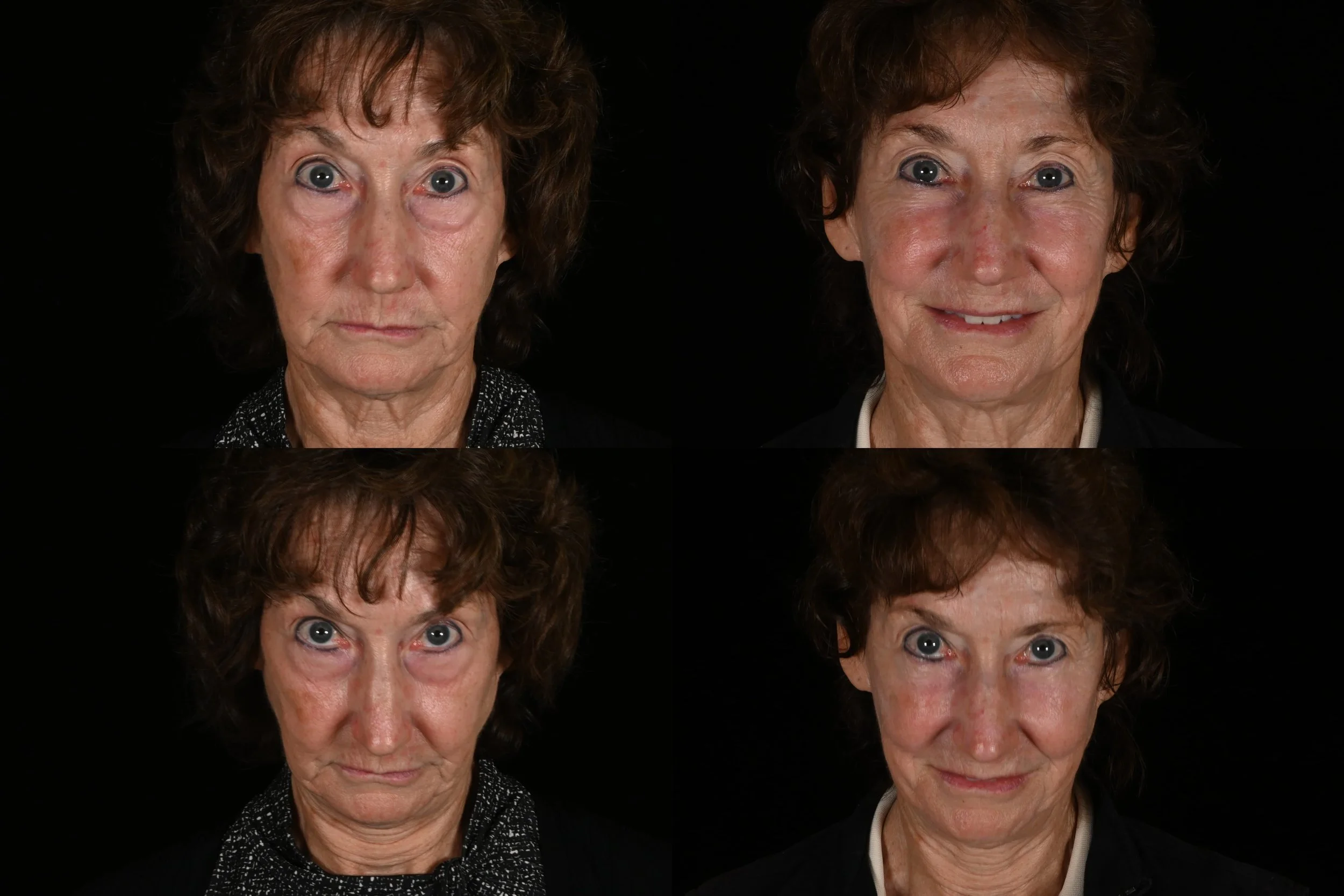
Fat grafting, lower blepharoplasty, ablative co2 laser resurfacing
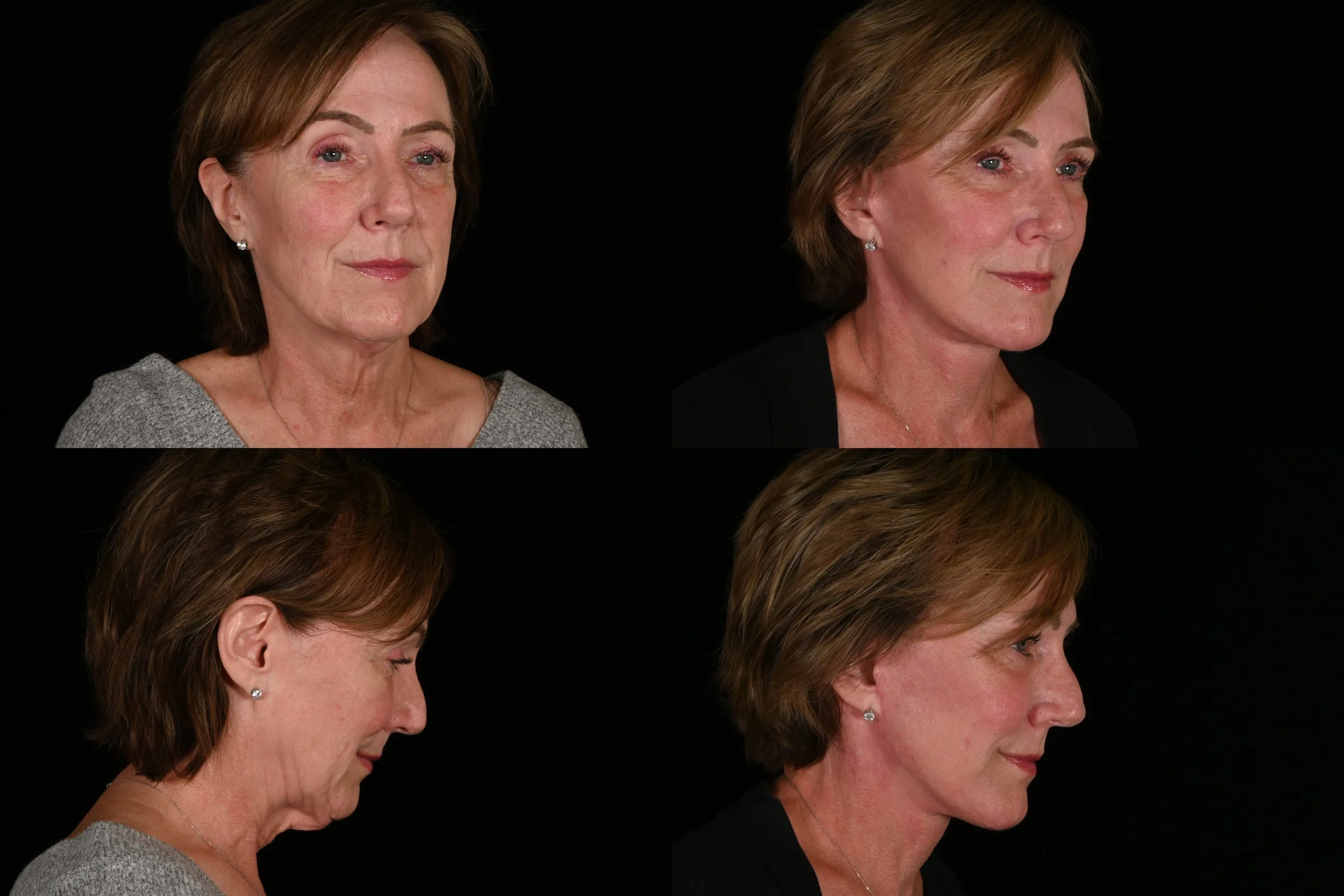
Fat grafting, ablative co2 laser resurfacing, deep plane facelift and neck lift
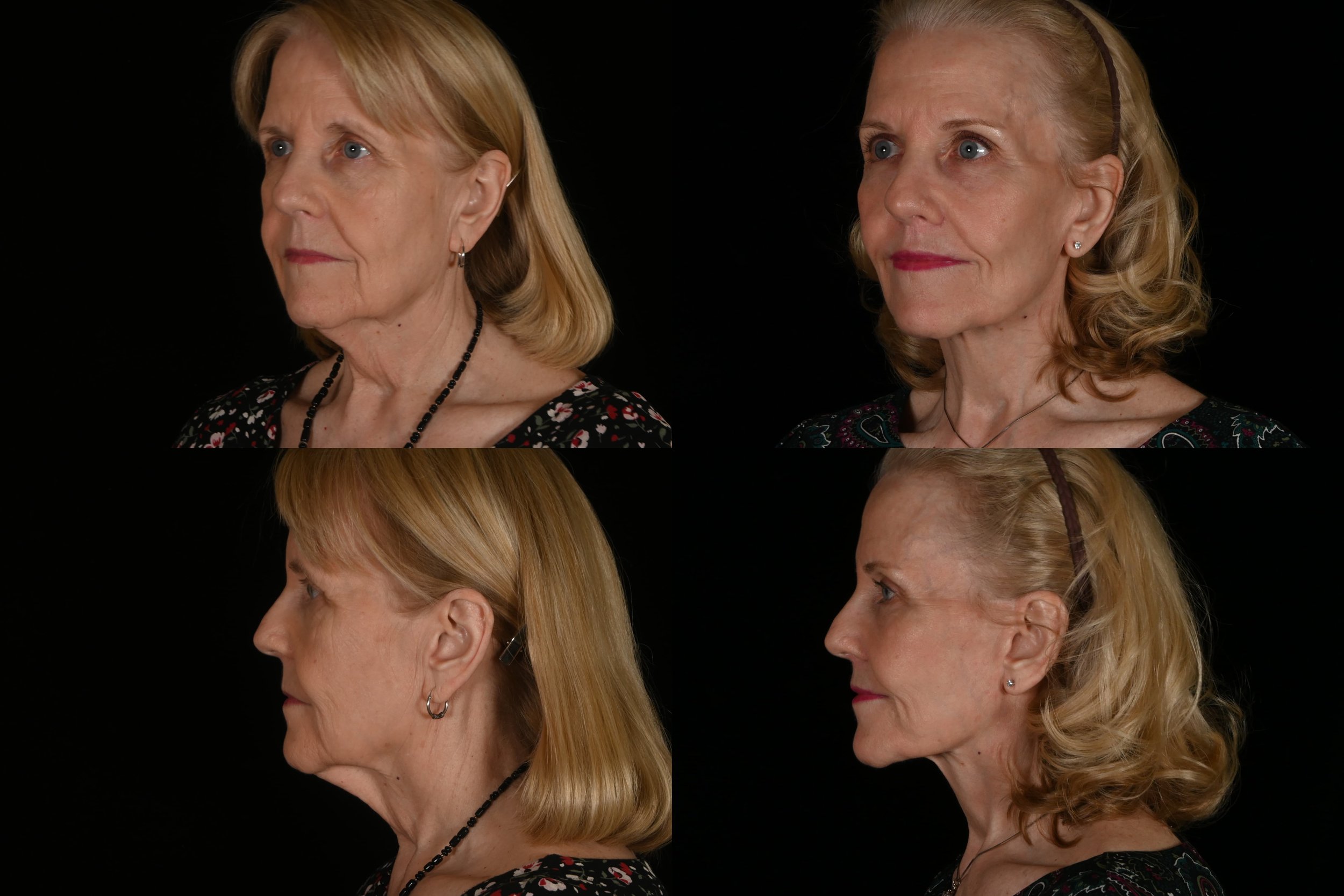
Fat grafting, ablative co2 laser resurfacing, lip lift, deep plane facelift and neck lift
-
Avoid blood thinning medications and nicotine. Discuss your surgery with your support person so they are ready to help the first 24-48 hours after surgery. We can arrange for hired help, if requested.
-
You can combine eyelid surgery, fat grafting, lip lift, ablative laser skin resurfacing.
-
Patients report that they feel well informed and cared for from the consultation through their recovery. They feel like ample time is given to answer all their questions. Read more about patients’ experiences here.
-
Healthy patients who desire an improvement in their face and neck are good candidates for deep plane face and neck lift. Patients can have unfavorable anatomy and desire an improvement earlier in life in their 30s or more commonly in their 50s. Patients should be within 15 pounds of their ideal goal weight prior to surgery.
Patients are required to be nicotine free 4 weeks before and 4 weeks after surgery.
-
Bleeding, infection, delayed healing, scarring, nerve dysfunction, cosmetic dissatisfaction, and anesthesia complications.
-
For isolated necklift surgery: underneath the chin and in some cases around the ear lobe.
For face and neck lift surgery: underneath the chin and around the ears into the occipital hairline.