
Ear surgery
Reshaping the ears for balance and confidence
Earlobe repair addresses stretched, torn, or split earlobes — including damage from heavy earrings, gauges, or trauma. Otoplasty addresses prominent ears, ear shape, and ear position — including correction of overly large or asymmetric ear cartilage.
Ear surgery at a glance
Overview
Earlobe reduction and gauged earlobe repair correct stretched or asymmetrical lobes through quick, minimally invasive in-office procedures with minimal downtime.
Otoplasty, or ear pinning surgery, reshapes, repositions, or reduces the ears for a more balanced relationship with the face. Ideal for prominent, protruding, or asymmetrical ears, otoplasty offers permanent correction. Since ears reach roughly 85% of adult size by age five, otoplasty suits both children and adults.
Dr. Anghel prioritizes symmetry and proportion, placing incisions in the natural crease behind the ear for virtually undetectable scarring.
Recovery
Earlobe reduction and gauged earlobe repair has nearly no downtime, stitches are removed at 1 week and most people can return to normal activity at that point. Most otoplasty patients return to social activity or work within 7–10 days.
A soft headband is worn continuously for the first week, then during sleep for an additional 4–6 weeks to protect ear positioning. Swelling and mild bruising around the ears are expected during the first 1–2 weeks.
Most patients manage discomfort comfortably with over-the-counter medications.
Results
Ear surgery results are visible immediately once dressings are removed. Swelling peaks 2–3 days post-op, bruising subsides within 1–2 weeks, and swelling improves roughly 80% by 2 weeks, 90% by 1 month, and 95% by 3 months.
Scars are well hidden, fading from fine pink lines to thin white lines. Full healing and final results are complete within one year, delivering natural, well-proportioned ears.

Types of ear surgery

Ear pinning (otoplasty for prominent ears)
For patients whose primary concern is the shape, size, or definition of the nasal tip — including a wide, bulbous, or drooping tip — without requiring changes to the bridge. This more limited procedure delivers precise, targeted refinement with a focused recovery.

For patients with overly large ears — a condition known as macrotia — ear reduction surgery reduces the overall size of the ear while preserving its natural shape and proportion. This procedure addresses patients who feel their ears are disproportionately large relative to their face, regardless of projection.
Ear reduction (macrotia correction)

For patients with torn, stretched, or gauged earlobes — often the result of heavy earrings, trauma, or intentional stretching — earlobe repair surgery restores the earlobe to a natural shape. Earlobe reduction is also performed for patients with naturally large or elongated lobes. Both procedures are performed under local anesthesia with minimal downtime, and earlobes can typically be re-pierced after several months of healing.
Earlobe repair and reduction
For patients seeking a preview of chin projection or a subtle enhancement without surgery, injectable chin augmentation using dermal filler offers a temporary, reversible option. This is an excellent starting point for patients considering surgical augmentation in the future.
Ear asymmetry correction
For patients born with congenital ear deformities — including cupped ears, lop ears, Stahl's ear, or underdeveloped ear structures — Dr. Anghel develops an individualized surgical plan to reconstruct or refine the ear's natural form, restoring both appearance and confidence.
Congenital ear deformity correction
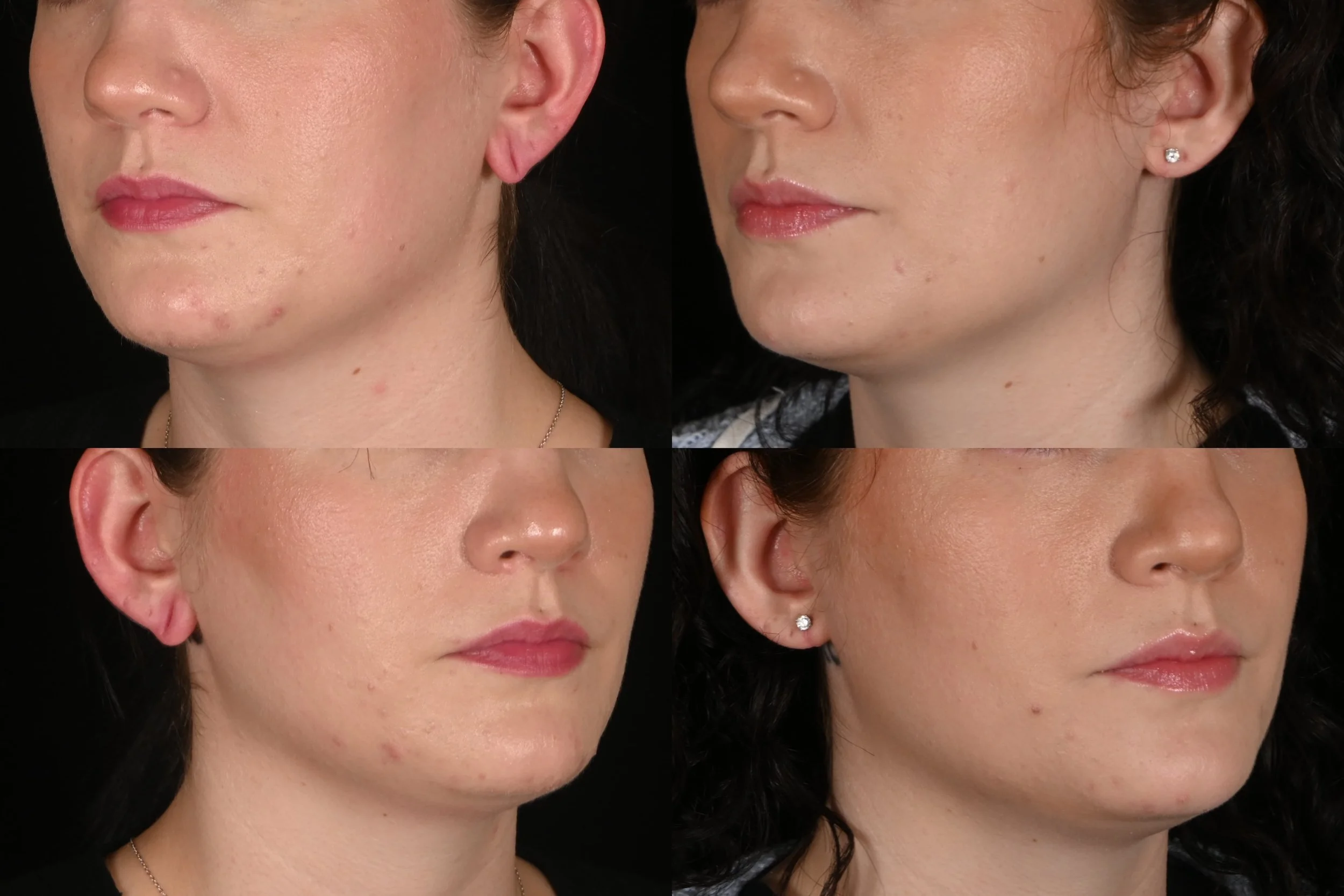
Ear lobe repair
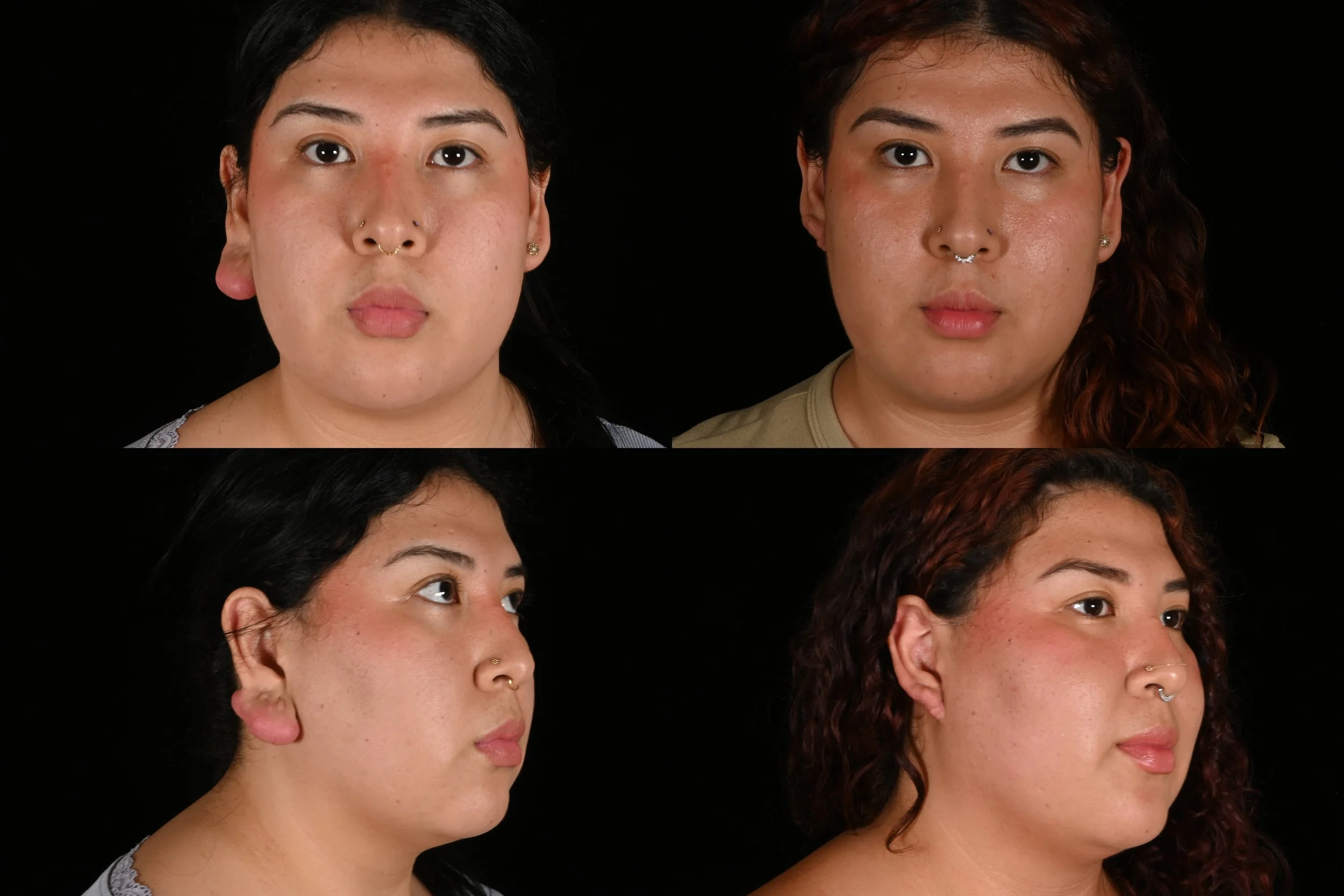
Keloid ear surgery
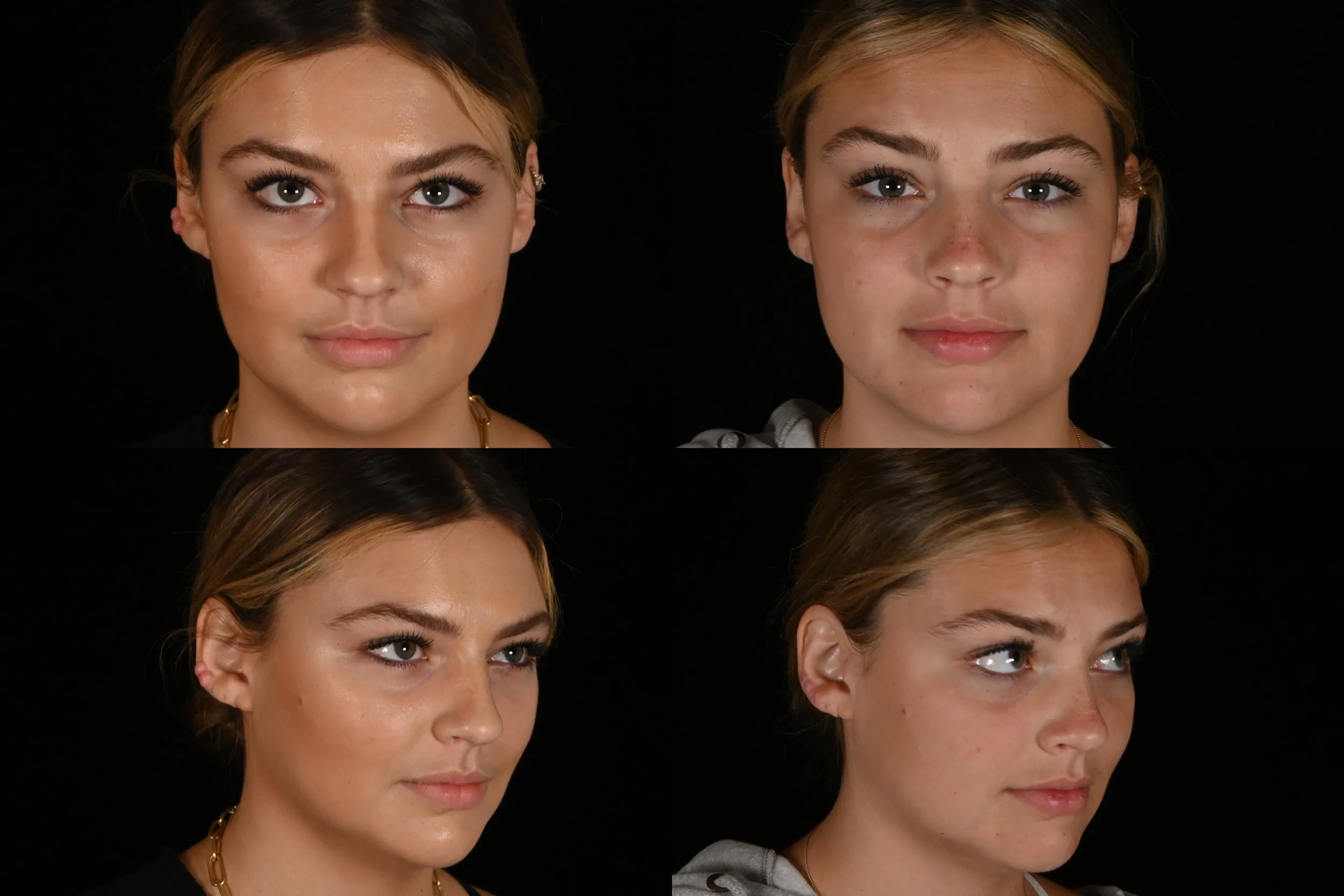
Keloid ear surgery
“Dr. Ersilia Anghel is an exceptional plastic surgeon, and I couldn’t be happier with my experience. I came to her for treatment of keloids on my ear, something I had been self-conscious about for a long time, and from the very first appointment she made me feel comfortable, heard, and confident in the treatment plan.
Dr. Anghel is incredibly knowledgeable and thorough. She took the time to explain my options, set realistic expectations, and answer every question I had. The procedure and follow-up care were handled with such precision and care, and the results have been better than I expected. My ear looks and feels so much better, and the keloids have significantly improved.”
“I cannot recommend Dr. Anghel enough! I came to her to repair an ear that had been pierced incorrectly when I was a child and from the very first consultation, she made me feel completely at ease. She is incredibly caring and takes time to truly listen, ensuring that all concerns are addressed with patience and understanding. I would absolutely trust her again and highly recommend to anyone seeking thoughtful, high-quality care.”
“Amazing work! The procedure was quick and painless, the recovery was also very easy. My ears look great!”
-
Avoid blood thinning medications and nicotine. Discuss your surgery with your support person so they are ready to help the first 24-48 hours after surgery. We can arrange for hired help, if requested.
-
You can combine eyelid surgery, fat grafting, lip lift, ablative laser skin resurfacing.
-
Patients report that they feel well informed and cared for from the consultation through their recovery. They feel like ample time is given to answer all their questions. Read more about patients’ experiences here.
-
Healthy patients who desire an improvement in their face and neck are good candidates for deep plane face and neck lift. Patients can have unfavorable anatomy and desire an improvement earlier in life in their 30s or more commonly in their 50s. Patients should be within 15 pounds of their ideal goal weight prior to surgery.
Patients are required to be nicotine free 4 weeks before and 4 weeks after surgery.
-
Bleeding, infection, delayed healing, scarring, nerve dysfunction, cosmetic dissatisfaction, and anesthesia complications.
-
For isolated necklift surgery: underneath the chin and in some cases around the ear lobe.
For face and neck lift surgery: underneath the chin and around the ears into the occipital hairline.