
Eyelid & brow lift surgery
Restore the upper-third of the face
Eyelid surgery addresses excess upper eyelid skin, eyelid ptosis, lid position, and lower eyelid rejuvenation — including lower lid fat herniation. Often, eyebrow contouring and brow lifting can be performed simultaneously. A precise facial analysis and in-depth discussion of your goals is the foundation of every individualized treatment plan.
Eyelids at a Glance
Overview
Blepharoplasty improves the appearance of the upper lids, lower lids, with meaningful functional vision benefits. Eyelid rejuvenation surgery addresses three key areas: lid position, excess eyelid skin, and under-eye fat bulging, each individually assessed for a fully personalized treatment plan. Brow position can be enhanced through brow pexy or endoscopic brow lift techniques.
Ablative laser skin resurfacing and fat grafting are often combined with lower blepharoplasty to improve skin quality and restore volume.
Recovery
Most blepharoplasty and brow lift patients return to social activity or work within 7–10 days. Expect swelling and bruising around the eyes in the initial recovery days, with blurry vision possible for the first few days to weeks after eyelid surgery.
Most patients manage discomfort with over-the-counter medication, avoiding narcotics. Dr. Anghel recommends avoiding strenuous activity for the first 4 weeks following surgery, while gentle walks and stretching are encouraged throughout blepharoplasty recovery to support healing and circulation.
Results
Eyelid and brow lift results are noticeable immediately after surgery. Swelling typically peaks 2–3 days post-op, with bruising subsiding within 1–2 weeks. Swelling is about 80% resolved by 2 weeks, 90% by 1 month, and 95% by 3 months post-surgery.
Upper blepharoplasty scars begin as thin pink lines, gradually fading to nearly invisible white lines over time. Dr. Anghel’s lower blepharoplasty technique is usually scarless.
Full healing and final results are typically complete within six months, revealing refreshed, natural-looking eyelid and brow rejuvenation.

Types of eyelid & brow lift surgery

This surgery is for patients with excess upper eyelid skin or upper eyelid hooding. The incision is placed in the lid crease and is well hidden once healed. The upper eyelid fat pads can be reduced at the time of surgery, if needed. This often results in a functional improvement for patient’s vision.
Upper blepharoplasty

This surgery is for patients who desire and improvement in the contour of the lower lids, often due to herniation or bulging of the lower lid fat pads. Most patients also have a hallow of the lower lids that is improved with fat grafting to smooth the appearance of the lid to cheek junction. Finally, the skin of the lower lids is resurfaced using ablative laser. The incision for this surgery is hidden inside the lower lid (transconjunctival approach), so there is no visible scar.
Lower blepharoplasty

This surgery is for patients with descent of the brow position. This is done using an incision at the hairline and in the temples to lift up the skin of the forehead and scalp and recontour the brows and is know as a endoscopic style comprehensive brow lift. The scar is well concealed in the hair. This is the most powerful brow lift.
Brow lift
This surgery is for patients with low lid creases or “sleepy eyes.” The position of the upper lid over the iris is corrected to result in a more open eye appearance. Often this has a functional benefit for patients as well.
Upper lid ptosis repair
This surgery is commonly paired with lower blepharoplasty and ablative skin resurfacing of the lower lids in patients with significant skin excess of the lower lids. Through an incision below the lower lash line, a conservative amount of skin is removed to improve the crepey appearance.
Lower lid skin pinch
This is a conservative brow lifting technique that is done simultaneously with upper lid blepharoplasty. Through the upper eyelid incision, the brow fat pad is re-suspended and supported to gently lift and stabilize the outer eyebrow.
Brow pexy
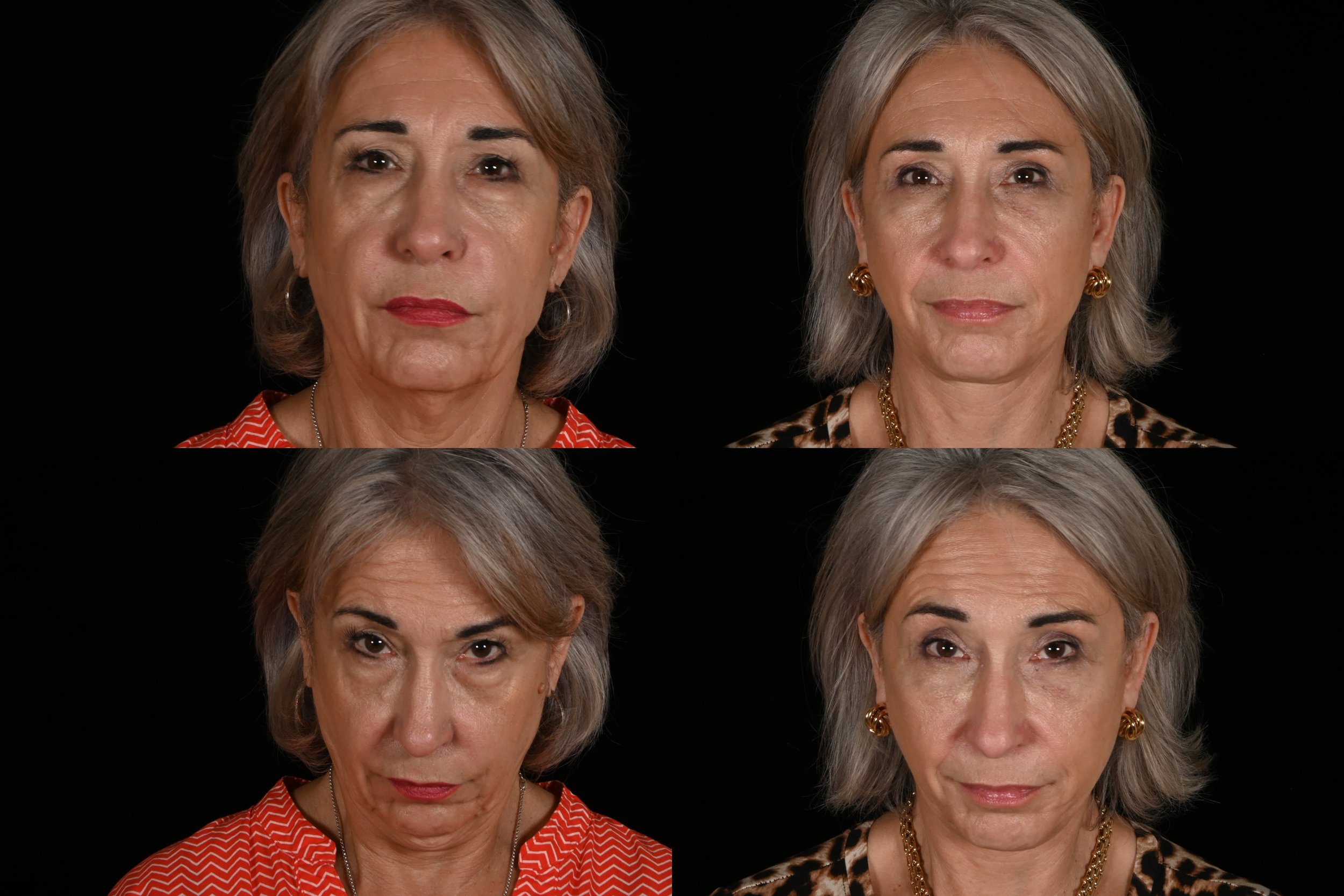
Upper blepharoplasty, lower blepharoplasty with fat grafting, deep plane face and neck lift, ablative co2 laser resurfacing
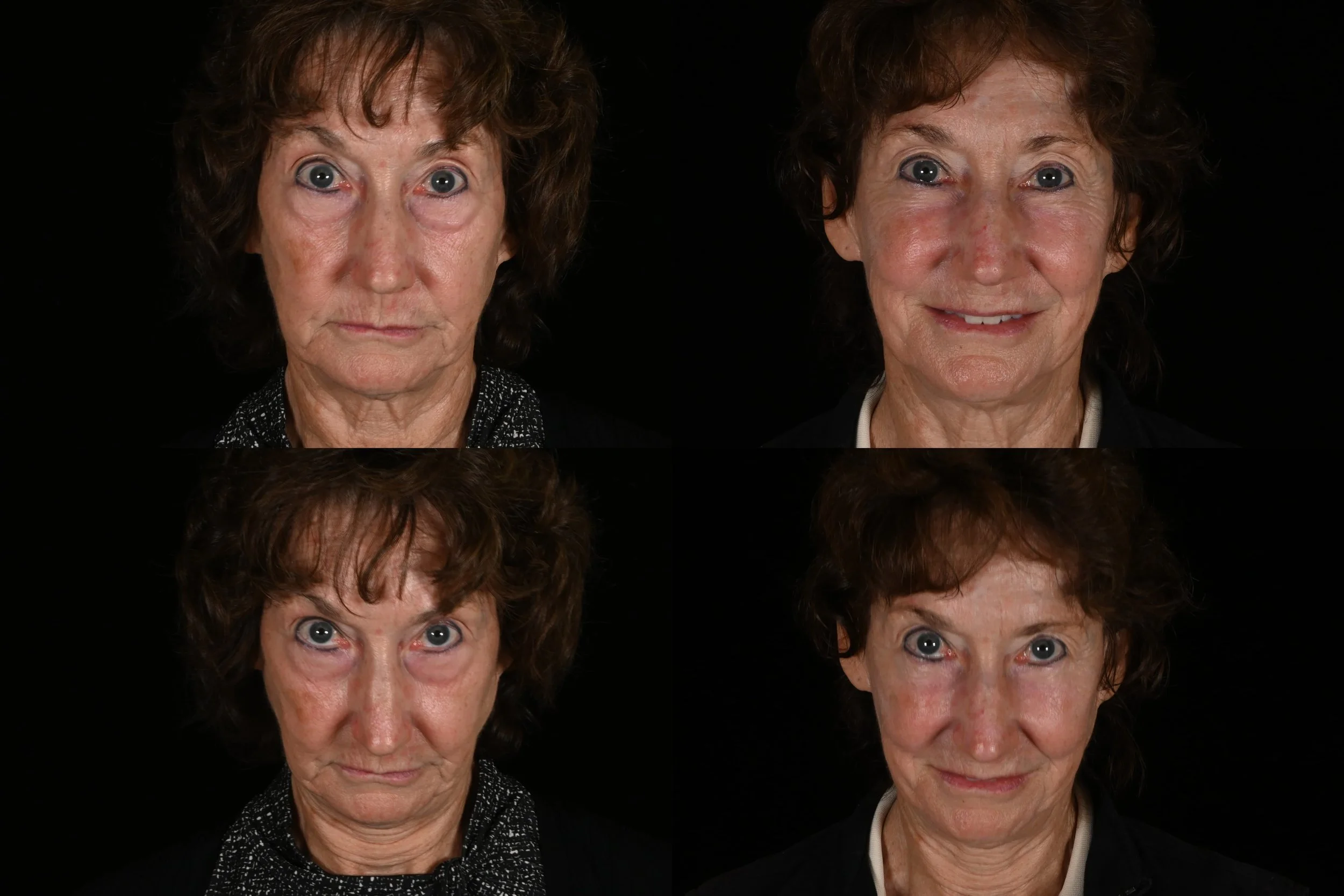
Lower blepharoplasty, fat grafting, ablative c02 laser resurfacing
“I went to Dr. Anghel for a Blepharoplasty. I was always self-conscious of this area, so I’m so glad I reached out to her! I felt very comfortable in my consult, and I appreciated her unique approach to get me to my desired results, without loosing my natural look. Dr. Anghel made me feel very comfortable during surgery and all follow-ups, and I’m so thrilled I was in such great hands. I will use Dr. Anghel for any future work!”
“I saw Dr. Anghel after consulting with a different plastic surgeon about having the bags under my eyes fixed. The first surgeon let the nurse explain the procedure to me and he spent less than 5 minutes with me. Dr Anghel sat down with me, explained the procedure, what to expect afterwards, listened to my concerns and answered all my questions. She put me at ease and I felt completely confident to have her fix my baggy eyes. It’s been a little over a year and I’m happy with the results. I would highly recommend Dr. Anghel to anyone thinking about plastic surgery.”
-
Avoid blood thinning medications and nicotine. Discuss your surgery with your support person so they are ready to help the first 24-48 hours after surgery. We can arrange for hired help, if requested.
-
You can combine facelift and neck lift, fat grafting, lip lift, ablative laser skin resurfacing.
-
Patients report that they feel well informed and cared for from the consultation through their recovery. They feel like ample time is given to answer all their questions. Read more about patients’ experiences here.
-
Healthy patients who desire an improvement in their eyes are good candidates for eyelid surgery and brow lift. Patients can have unfavorable anatomy and desire an improvement earlier in life in their 30s or more commonly in their 50s.
Patients are required to be nicotine free 4 weeks before and 4 weeks after surgery.
-
Dry eyes, blurry vision, eyelid malposition, bleeding, infection, delayed healing, scarring, nerve dysfunction, cosmetic dissatisfaction, and anesthesia complications.
-
For upper eyelid surgery the scars are hidden in the lid crease. For lower eyelid surgery the scars are inside the eyelid and invisible, sometimes there’s a scar on the lower eyelid at the lashline.
Temporal browlift incisions are hidden in the hairline.